IEA sees Azerbaijan’s TAP gas deliveries to EU holding steady this winter
The International Energy Agency forecasts that Azerbaijani gas shipped to the European Union through the Trans Adriatic Pipeline will remain largely stable this heating season, as throughput already sits near maximum capacity.
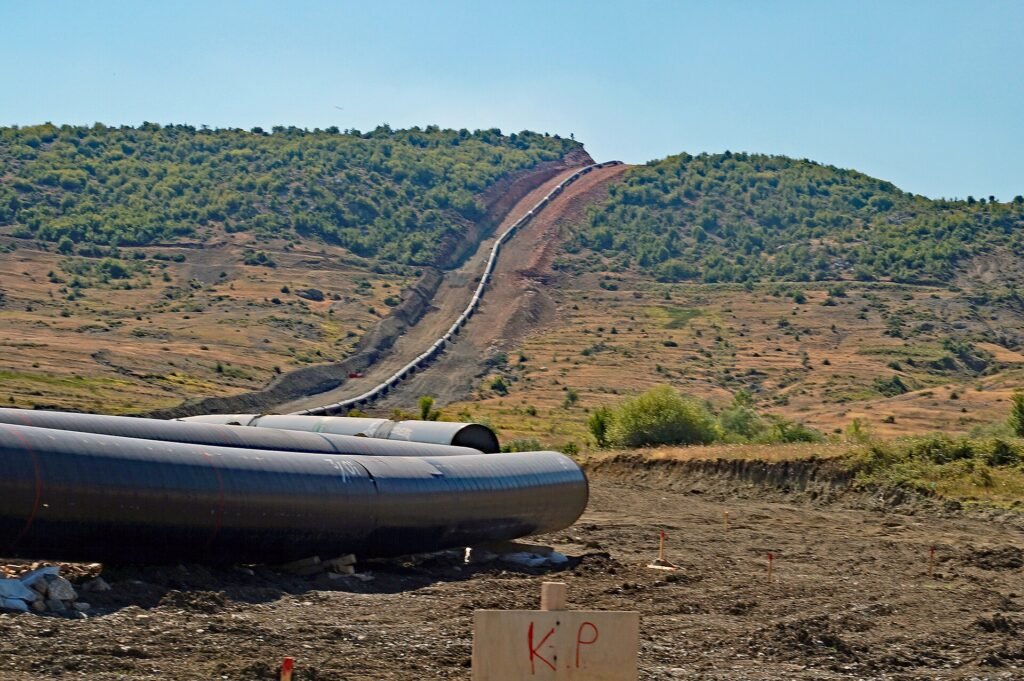
According to the agency’s Global Gas Security Review 2026, pipeline gas deliveries across Europe have limited scope for growth since volumes are already running close to their rated capacity. The assessment covers TAP directly, the route that moves Azerbaijani gas from the Shah Deniz field into European markets.
The report also pointed to a slight overall decrease in Europe’s pipeline imports versus last year’s heating season. Supply from Norway to other parts of the continent is expected to drop by roughly 1%, equal to about 1 billion cubic meters, compared with a year earlier, due to a shutdown at the Ormen Lange field that is anticipated to continue through late January 2027.
Russian gas piped into the EU is forecast to remain roughly in line with figures from the 2025/26 heating season, since the bloc’s complete prohibition on Russian pipeline gas does not come into force until the final quarter of 2027.
The IEA further noted that Azerbaijan’s gas shipments to the EU had already tracked closely with the previous year’s volumes across the first three quarters of 2026.
TAP serves as the European segment of the Southern Gas Corridor, stretching 877 kilometers starting at the border between Greece and Turkiye, crossing Greek and Albanian territory, then running beneath the Adriatic Sea before reaching Italy’s southern coastline. The line’s starting capacity stands at 10 bcm annually, with potential expansion up to 20 bcm. To date, the pipeline has transported more than 60 bcm of gas into Europe, with 50 bcm of that total going to Italy.
Why it matters for markets: Steady TAP and Russian pipeline volumes, combined with a small pullback in Norwegian supply, will determine how tight Europe’s gas market is entering winter, affecting European gas prices and, by extension, wider energy costs and the euro.
Source: Trend (business)