OPEC+ expected to hold Q1 2027 oil output targets steady
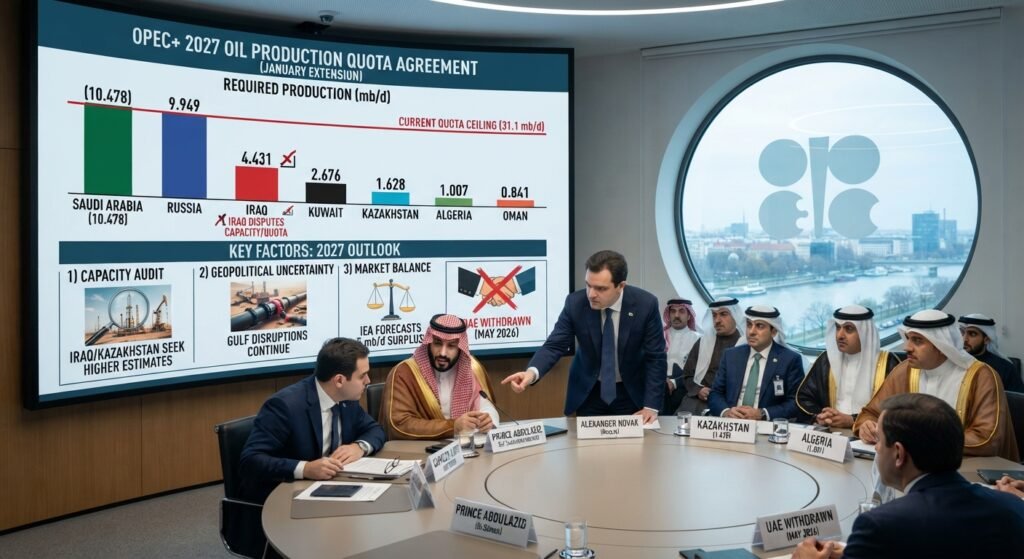
MOSCOW/LONDON — OPEC+ oil producers are expected to leave first-quarter 2027 output targets unchanged at Sunday’s meeting, according to three sources who spoke to Reuters. Discussions are being complicated by uncertainty over the Iran war and disagreements over production-capacity estimates.
OPEC+ groups the Organization of the Petroleum Exporting Countries with allies including Russia. The alliance had planned to use the findings of its first-ever review of members’ production capacity to help set 2027 targets at Sunday’s meeting, but disputes over some estimates have complicated those talks.
The sources said the group has an agreement in principle to keep output targets unchanged in the first quarter of 2027. Oil ministers are scheduled to hold four meetings on Sunday.
Rapidan Energy Group also expects no changes to production targets, citing uncertainty over how long the Iran war will last and how it will affect crude output and exports.
The capacity review has created tension among some members. Iraq is dissatisfied with preliminary findings that put its production capacity at 4.9 million barrels per day, while Kazakhstan is also seeking a higher estimate, sources told Reuters earlier this week.
Russian Deputy Prime Minister Alexander Novak said on Wednesday that the group would complete the capacity review by the end of the year, and that ministers on Sunday would see what stage the review had reached.
Oil surplus forecasts weigh on market
Rystad Energy forecasts a global oil surplus of about 5 million barrels per day next year — roughly 5 percent of worldwide demand — even if Gulf supplies recover only partially. The outlook highlights the pressure on OPEC+ as it considers production policy for 2027.
Sunday’s meeting comes months after the United Arab Emirates left OPEC and OPEC+ in order to pump more oil, after years of arguing that its quota did not reflect its investment in capacity. Angola quit OPEC at the start of 2024, and Iraq has warned it may leave if its quota is not raised.